
An Inside Look Into Nebraska Supreme Court And Its Often Unanimous Decisions
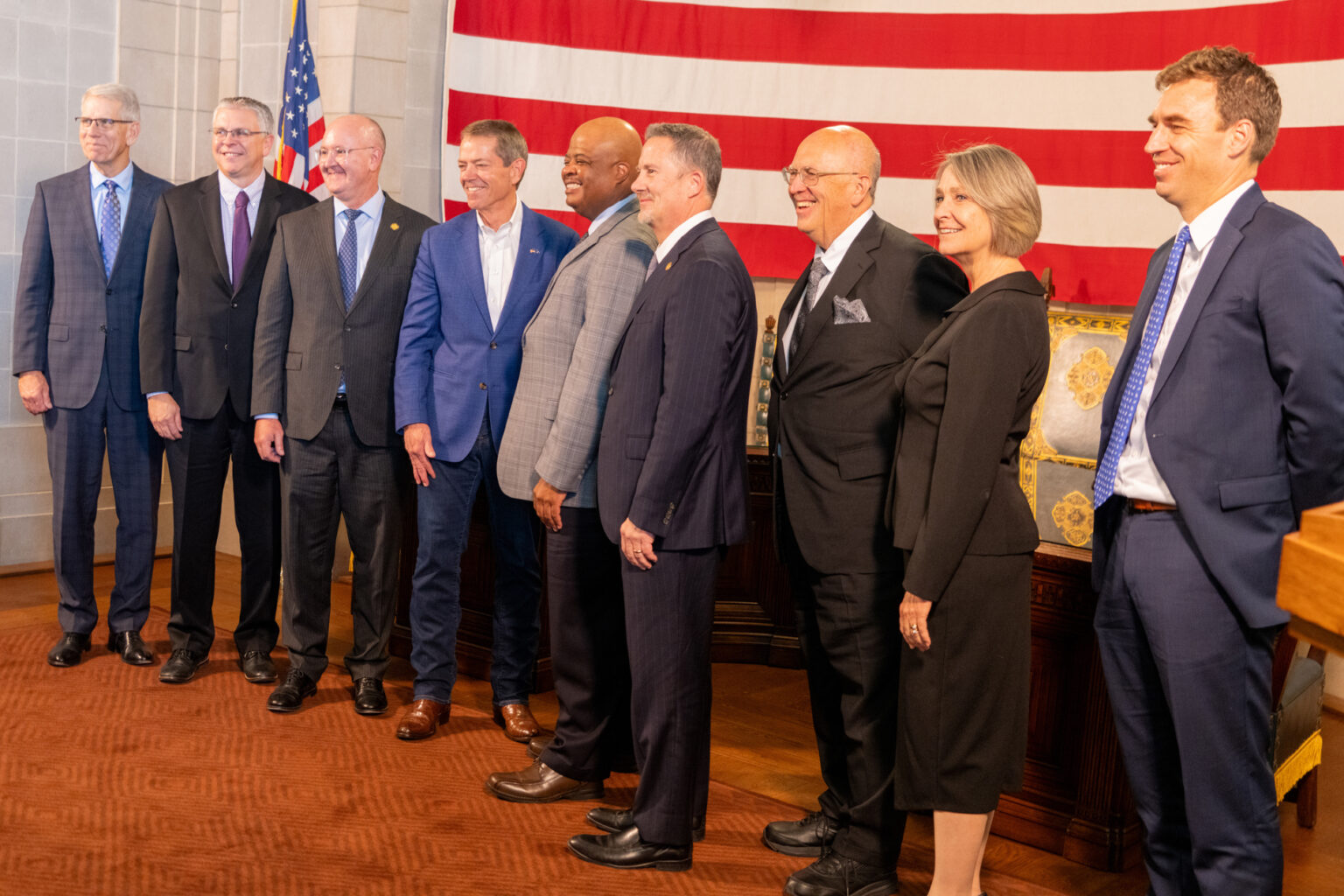
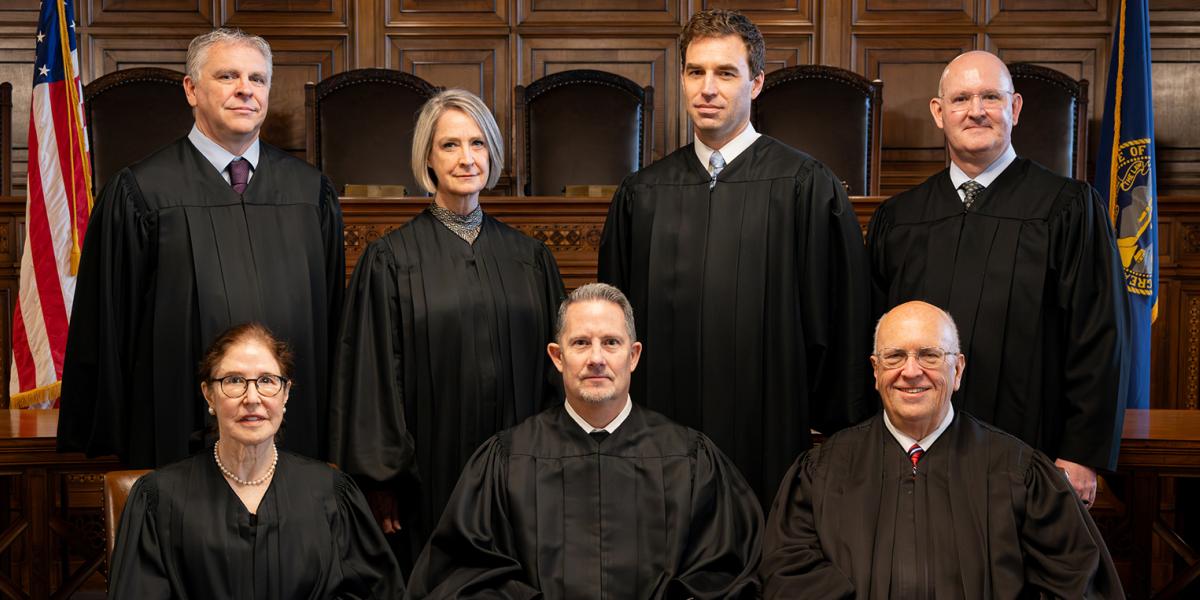
LINCOLN — The seven members of the Nebraska Supreme Court ruled unanimously in all but one of 105 written opinions issued in the past year.
The two years prior, the high court unanimously decided about 95% of its 272 written decisions. Exceptions included dissents in cases dealing with voting rights for felons, whether the state could be held liable in cases of child sexual assault and what constitutes a “single subject” for some legislative bills.
Chief Justice Jeffrey Funke, who joined the Supreme Court in 2016 and was promoted to the top job in November 2024, told the Nebraska Examiner in a broad November interview that justices “try really hard to get to a unanimous vote.”
“The reason we do that is our cases are stare decisis, a precedent for the lower courts and the attorneys, practitioners, to use as guidance. They’re binding authority,” Funke said. “We want to be able to say something as clearly as we can and as unanimously as we can so that trial judges have confidence that that’s what the law is.”
Oral Arguments
The Nebraska Supreme Court consists of a chief justice, who represents the state at large, and six associate judges who each represent a different district. The Supreme Court looks at all appellate cases and decides whether to keep or send them to the state’s Court of Appeals, Funke said.
Supreme Court justices get every seventh case, as assigned by the clerk. Justices then begin working the case up with the assistance of two law clerks on where it might go. Attorneys are scheduled to file briefs on their cases before oral arguments.
At those monthly oral arguments, all justices have an opportunity to ask questions about cases beyond what Funke said is an often “sterile record” devoid of emotion or chances to weigh credibility and see witnesses live. It’s a chance to connect with attorneys who have “lived with the case” for two or three years, if not longer, but who justices have had in front of them for just a couple of months.
“It’s just an opportunity to really have a conversation about the case,” Funke said.
Crafting An Opinion
Immediately after oral arguments, the Supreme Court justices head back to a consultation room behind the courtroom. The “author judge,” whose assignment is not announced publicly, leads the discussion and sometimes says how they feel it should be decided, pending feedback.
The lead judge then takes that information back and starts drafting an opinion, which can take a couple of weeks to a month, or even six months. It’s often circulated to other justices for review, with chances for other justices to ask informal questions or suggest changes.
Once the case is ready, it will be put back up for formal consultation — a weekly meeting every Wednesday at 9 a.m. — before a final vote on the case, which is recorded internally.
If a Supreme Court justice disagrees on the legal argument or outcome of a case, they can sometimes work with the author judge on small tweaks that, if made, wouldn’t materially change the majority’s decision on a case but could bring that justice more on board. It might also move a judge to “concur” with the outcome, but for different legal reasons.
Often, Funke said, a dissenting judge has already shared their view and already shared a draft. Justices can also “concur” if they agree with all or part of the majority opinion but do so by a different legal reason or want to bring up other issues they feel should have been addressed. Of the decisions issued in the past three years, about 10% included one or more concurrences.
If the assigned author judge happens to also be the dissenting judge, Funke said he’s seen that resolved in one of two ways.
One, the author judge won’t agree with the majority but understands the issue well enough to write how the majority wants it. The case might then be signed off as “per curiam,” without saying who wrote it, and the justice might still write a separate dissent.
Two, the author judge might ask the chief to reassign the decision. The resulting judge might take some thoughts from the first assigned justice.
One rare case in recent years came in 2024, when a divided Supreme Court agreed to force Secretary of State Bob Evnen and Attorney General Mike Hilgers to comply with a new state law that gave voting rights back to convicted felons immediately after they completed their sentence, rather than two years after. It was decided 5-2 in favor of voting rights groups.
Every justice wrote in that case, plus the majority “per curiam” outcome. One justice concurred with the outcome but dissented with part of the majority opinion.
Supreme Court opinions are released every Friday morning, while the Court of Appeals releases its decisions every Tuesday morning. The day before, the courts announce what cases the courts expect to weigh in on.
A Typical Day-To-Day
Funke said Supreme Court justices spend their days reading cases assigned to them and reviewing records, transcripts and attorney arguments on why a trial court decision was right or wrong. The remaining time, justices write, which Funke said is about 200 opinions each year.
Each Supreme Court member also has specific duties, such as overseeing probation, problem-solving courts, court technology, security or disciplinary complaints.
“Not what I would call super exciting on the cutting edge of activity, but we spend a lot of time in our offices reading and writing and preparing for court,” Funke said.
‘Fortunate And Blessed’
Funke served as a trial court judge between 2007 and 2016 before joining the Supreme Court, which he said was a separate “baileywick.”
A “good” trial judge, Funke said — one who people respect and know will listen and hear evidence to make an informed decision — will often spend their days in trial but write decisions on nights and weekends. Trial judges then spend additional time researching and writing more opinions and orders “purely on what the law is,” Funke said.
There are about 150 judges statewide who annually deal with close to 335,000 cases each year, Funke said. Of those, about 300,000 are in county courts, another 34,000 are in district courts and about 1,000 are considered by the Court of Appeals or state Supreme Court.
Many judges spend time in and give back to their local communities, too.
Said Funke: “We are fortunate and blessed to have really good judges that just really remember where they came from and who they’re supposed to be serving.”
This story was published by Nebraska Examiner, an editorially independent newsroom providing a hard-hitting, daily flow of news. Read the original article: https://nebraskaexaminer.com/2025/12/02/an-inside-look-into-nebraska-sup...
Category:
User login




Omaha Daily Record
The Daily Record
222 South 72nd Street, Suite 302
Omaha, Nebraska
68114
United States
Tele (402) 345-1303
Fax (402) 345-2351
222 South 72nd Street, Suite 302 | Omaha, Nebraska 68114 | United States | Tele (402) 345-1303 | Fax (402) 345-2351 | Sitemap
