How Deregulation Made Electricity More Expensive, Not Cheaper
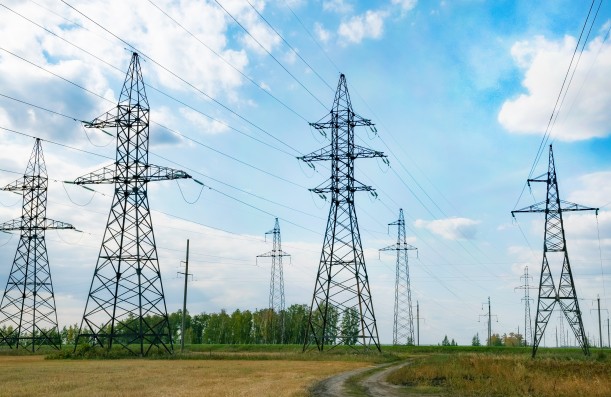
(Verbitskaya Svetlana / Shutterstock)
American families are feeling the pinch of rising electricity prices. In the past five years alone, the generation portion of the standard service residential electric bill in Columbus, Ohio, has increased by 110%. This is one data point in a national trend.
Energy affordability is quickly shaping up to be a key election issue at all levels of American politics. And more than half of U.S. adults surveyed in January 2026 reported being very concerned about the price of electricity.
Experts in the energy industry are fiercely conflicted on what, or who, is to blame. People have sought to blame geopolitical events like the war in Ukraine, dramatic changes in U.S. energy policies, power grid operators, regulators and artificial intelligence and data centers.
But new research from The Ohio State University’s Energy Markets and Policy Group, where I serve as principal investigator, provides new insights about another factor you were probably not thinking about – middlemen introduced by deregulation.
How Deregulation Brought Middlemen Instead Of Competition
Between the late 1990s and early 2000s, several state legislatures deregulated their electricity systems. Deregulation was originally sold as a way to replace inefficient regulation and reduce bureaucracy. People were told that competition would deliver lower prices.
Under the old system, a state regulatory commission set prices for all electricity services – generation, transmission and distribution – which were supplied by the same monopoly utility company. Each state commission was required by federal law to ensure that rates were “just and reasonable.” Under deregulation, that same commission rate-setting process still holds for transmission and distribution, but the generation part was split off.
Deregulation created competitive wholesale markets for generation, but price competition did not spread widely at the retail level. In states with active retail deregulation, there are two ways the retail generation price can be set. Consumers get to pick which one – buy from a marketer on the open market, or do nothing. Most people choose to do nothing.
Rather than introducing efficiency, this system of retail deregulation created a new complexity: middlemen marketers. In most cases, no matter which choice people make, it’s hard for them to understand how their electricity rates are set. That’s where our research comes in.
Option A: The Open Market
Electricity customers in deregulated retail markets can choose a company that buys the electricity on their behalf. People who live in these states may be familiar with energy salespeople who come to their homes, approach them in a convenience store, or use telemarketers.
For example, people who live in the Cincinnati area can contract with one of more than 50 suppliers to buy electricity on their behalf from the wholesale market. Their monthly bill would still come from Duke Energy, a regulated distribution utility, and would still include regulated charges for distribution and transmission set by state and federal officials. But it would also include charges from an unregulated retail supplier, for the generation part of their bill – their electric supply.
Some locations also have community choice aggregation, in which their municipality participates in the open market on their behalf unless they opt out.
Our research has found that these markets are not working as intended.
Option B: Do Nothing – Default Service
For people who choose not to shop on the open market, by doing nothing they remain on what is called the “standard offer” or “default service.” Sometimes it is also called “provider of last resort” service because it is not meant to be the best option.
For these people, state law generally requires each distribution utility to hold auctions or use a procurement process like a request for proposals to determine which middlemen companies get to be their supplier, and of course, at what price.
People in this category still buy from middleman marketers. But rather than choosing their own middleman, they get the middleman the utility company selects for them.
Problems In The Open Market
People who live in states with deregulated electricity markets know that these open markets have many problems. There have been investigations into unfair trade practices, lawsuits and regulatory penalties for misleading sales practices.
Other problems include deceptive marketing, a process called “slamming” in which companies change customers’ suppliers without their knowledge, contract loopholes that increase prices, and outright fraud.
Help for consumers usually comes after problems have arisen, rather than preventing them in the first place.
Our research team sought to determine whether, and how much, electricity consumers would save money if they used the supposedly competitive open market, rather than going with the default rate. To answer this question, we developed a detailed database of every daily retail choice offer filed by every supplier in all service territories in Ohio for a decade – which meant compiling millions of records.
We found that 72.1% of the open-market offers exceeded the utility’s default rate. In some years, there was not even one single cost-saving offer for the entire year, or longer. The vast majority of these supposedly competitive electricity prices were higher than customers would get by doing nothing. Taking the time to research the market and compare prices was often not worth consumers’ time.
Importantly, the study found that suppliers in the open market were not setting their prices based on market fundamentals – like the underlying wholesale price of electricity. Instead, they were setting prices based on the results of the utility’s default supply selection. In a competitive market, that is not supposed to happen.
Is Default Service Really Competitive?
In a separate study, our team evaluated every default service auction in every utility service territory in Ohio since 2011, nearly 15 years. We found that the number of companies competing with one another in these auctions is a key determinant of the retail markup consumers have to pay.
In some of the default-option rate auctions, as few as five suppliers placed bids. In others, there were as many as 15 companies vying to provide default-option electricity. Our analysis found that in situations when the underlying costs of generating electricity were the same, default supply auctions with fewer bidders delivered significantly higher prices for consumers than auctions with more bidders.
The study included numerous statistical controls for other factors that could otherwise help explain the prices, including natural gas prices and market volatility. The number of bidders was the key factor. Having just three additional bidders could reduce consumers’ default-option rates by 18% to 23%. Nine additional bidders, the analysis found, could deliver savings of as much as 60%.
It’s important to note that Ohio’s process for setting default service rates is more robust than many other states. In some states, it is not uncommon for even fewer companies to bid. So Ohio’s situation is not actually a worst-case scenario for consumers. Rather, it’s probably better than many other states with deregulated electricity markets.
Putting It All Together
The first study showed that the open market is not setting efficient retail rates and is not working as intended. Most of the offers made available to consumers are not worth their time, and the suppliers in those markets are not setting their prices based upon market fundamentals. Instead, these companies are taking their cues from the local distribution utility’s default supply auctions. That is not how deregulation was envisioned.
The second study showed that the process which sets the default supply rate is also not very competitive. Less competition means the middleman companies bidding in those auctions can bid, and win, higher prices – raising electric bills and increasing their profit margin.
Energy deregulation promised lower prices through competition. But instead, consumers got an army of middleman marketers. And, those middlemen have been taking their cues from a bidding process that often has too few participants to keep prices low.
This article is republished from The Conversation, a nonprofit media outlet that uses academic and research content. Read the original article: https://theconversation.com/how-deregulation-made-electricity-more-expensive-not-cheaper-272780
Category:
User login



Omaha Daily Record
The Daily Record
222 South 72nd Street, Suite 302
Omaha, Nebraska
68114
United States
Tele (402) 345-1303
Fax (402) 345-2351
222 South 72nd Street, Suite 302 | Omaha, Nebraska 68114 | United States | Tele (402) 345-1303 | Fax (402) 345-2351 | Sitemap
