
A Schoolyard Courtroom in D.C.?
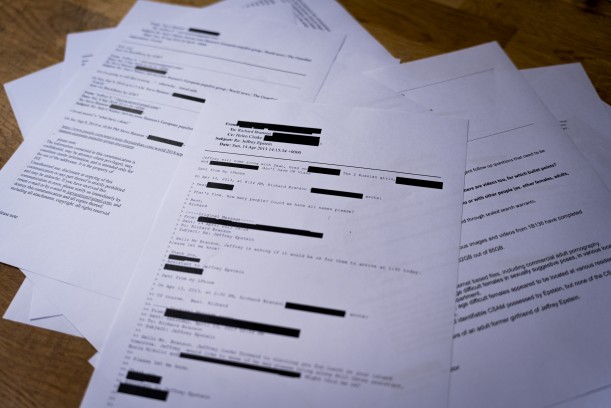
(davide bonaldo / Shutterstock)
After a judge has given a lawyer an order to produce files that he or she has, has any team of attorneys ever replied, “lol, no bro. We are good over here with what you have.” Shoot, I dunno myself; I don't practice law. Would refusing such an order to procure existing documents make a difference if it was a small-town judge or U.S. District Judge Emmet Sullivan? Last month, Acting Attorney General Todd Blanche was sued by journalist Katie Phang in Washington, D.C. for his continued failure to release all of the Epstein files, as was –and is– required by Congress. The judge agreed with Ms. Phang and allowed the lawsuit to proceed. He gave one month for Todd Blanche to release and unredact more of the Epstein documents.
At the deadline, Associate Attorney General Stanley Woodward, who was defending Mr. Blanche, did not in fact follow the judge’s order. He replied in the first: “The government has not knowingly violated, nor has it ever acknowledged violating the Epstein Transparency Act.” This translation for laymen, I believe, is lawyer-speak for “no." Then in the second, Woodward countered: "Although the Government strongly disagrees with the Court's ruling that the Epstein Files Transparency Act is enforceable by private parties through the Administrative Procedure Act, the Government welcomes this opportunity to resolve any confusion regarding the records at issue in this case.”
In further layman's terms which I could translate, this means, “Ms. Phang can’t sue us about this anyway.” And, to top it off, Woodward told Judge Sullivan that the judge could: A: accept the Department of Justice’s explanation and end the lawsuit here, or B: the judge could give the DOJ two additional months before asking for more documents. If I understand all of the Justice Department’s arguments and acts, in South Omaha layman's terms:
The judge says: “Give over the rest of what is required by law.”
Woodward: “We already gave the stuff.”
Then, in the way that a child who is caught red-handed tries to shift and distract, he points to Ms. Phang, “SHE isn’t even allowed to sue her own government, so no, I don’t need to give over the rest. But thank you, the DOJ will be here to tell you how the law works and answer questions.” Likely with a smug cross of his arms as I’d imagine a person with the bottom-of-the-barrel-scraping arguments like the associate attorneys at the DOJ, he probably leaned back like a schoolboy on a playground and chuckled,
“Judge, you can either take what I said and Phang loses, OR you can give me two more months and then ask me again.”
Wild. Is that how law works? I’ve worked with children for eleven years, and that is the kind of thing I’d hear from an angry pre-k kid. Shoot, are attorneys really pretending that Law is difficult when, at the end of the day, you can just tell a judge, “Lol, no bro. I followed the law, no one is allowed to sue me AND you can accept that or come back when I'm not so busy," (except, of course to dress it up in fancy words). What’s funnier is that a month ago during the preliminary hearing, Judge Emmet Sullivan wrote after hearing team-Blanche’s arguments that team-Blanche had failed to respond adequately to several of Ms. Phang’s arguments:
"The Attorney General has conceded that he is in violation of the Act.” (The Epstein Transparency Act).
Mostly, team-Blanche had initially argued the same DOJ rhetoric: that revealing more files and unredacting more things would harm more victims. At what point does the layman conclude that the government believes we are all idiots? During the initial releases of the millions of pages, the names of more than two dozen minors who suffered abuse were released; however, the names of the perpetrators remained so well hidden that the DOJ has yet to arrest any but the Pimp Epstein and his Pimpette Maxwell (who, after meeting with Blanche, was moved to a nicer prison with reportedly posh accommodations).
“Give him the benefit of the doubt", is a wonderful saying, which the Cambridge dictionary defines as: “To believe something good about someone, rather than something bad, when you have the possibility of doing either."
With this Administration’s Department of Justice, they initially said there were no Epstein files. Then the DOJ said that only Epstein and Maxwell used and abused children, and that was the end of it. Then they couldn’t release the files, or it would harm the victims, and then they released the files and redacted only some victim names and horrible photos, while keeping redacted the names of most of the perpetrators and still have yet to release the rest of the trove.
"Benefit of the doubt” no longer applies to America’s Justice Department when it comes to the Epstein files, nor should there be any ideation of "nobility”, when after being sued, the government can say, “citizens can’t sue us to follow our own laws, but THEY have to still obey them.”
Austin Petak is an aspiring novelist and freelance journalist who loves seeking stories and the quiet passions of the soul. If you are interested in reaching out to him to cover a story, you may find him at austinpetak@gmail.com.
Opinions expressed by columnists in The Daily Record are not necessarily those of its management or staff, and do not constitute an endorsement or recommendation. Any errors or omissions should be called to our attention so that they may be corrected. Contact us at news@omahadailyrecord.com.
Category:
User login




Omaha Daily Record
The Daily Record
222 South 72nd Street, Suite 302
Omaha, Nebraska
68114
United States
Tele (402) 345-1303
Fax (402) 345-2351
222 South 72nd Street, Suite 302 | Omaha, Nebraska 68114 | United States | Tele (402) 345-1303 | Fax (402) 345-2351 | Sitemap
